I've been struggling to find a DJ name. I've had about 4 incarnations and variations and I keep getting the feeling that DJ names are silly. "They are supposed to represent your style" But, I just find it silly. With my regular name, I have a wide range of styles and attitudes, which feels quite the opposite to a Dj name.
I also think about what names mean in entertainment. Most actors change their names to signify a simplicity and melting pot accessibility. DJs have used their own names, to completely abstracted names, to multiple monikers to hide behind a wall of letters. I am a big fan of MF DOOM and his approach as he takes on aliases (Viktor Vaughn, King Geedorah, etc) in juxtaposition to where the rest of Rap goes.
I also think of Techno, where it was a lonely and poor scene, so Derrick May would throw you a bunch of aliases to play up the scene... to show numbers, which feel led to the growth in attention and eventual popularity.
I like these ideas that your name is connected to the cultural context of what you are coming from. In what I do, a transnational cross-pollination of soundsystem music with a focus on that Tropical and Global boom boom... I don't know where to go. I'm a big fan of names like Geko Jones, Batida, Gato Preto, and Sabo. They are on some other place.. and you have to go to them to get it.
I've been going by "selecta" but that name seems boring. It's played out. So, here are a list of names I'm going to use... feel free to share and enjoy. My approach is that we cling too much on the name, and my moods change from a techy-sinister vibe, to Tropical, to Transnational, to Hip Hop... I'm a LatinGringo with no home... so there really shouldn't be a static name.
77s
Selecciones
Selecta
DJ Basura
Nasty Structure (probably my production name)
DJ Sucio (but I'm sure that someone in the DMV has that)
Tunkul
hijo del sol
Najera
Showing posts with label Features. Show all posts
Showing posts with label Features. Show all posts
Tuesday, March 19, 2013
Sunday, July 22, 2012
Roots of Hip Hop? Louis Armstrong's "Ol' Man Mose" from 1935
The embed has been giving me trouble, just in case, listen here... http://www.youtube.com/watch?v=95zqe-Qz-SM
Wednesday, May 9, 2012
Worldwide - Graf, Tags, and Hip Hop from Germany, Switzerland, and between

Tagging is not exclusive to Hip Hop, but the majority of the styles drew from it. I didn't see an overbombardment of tags, except near the skate shop in downtown Wiesbaden (Wiesbaden is actually an "uppity" city 40 minutes from the more bustling Frankfurt, making it more unique). Where kids would ride their boards at night drinking from liqour bottles. Otherwise, the tags and grafs were pretty spread out from one another... all quite visible, and no sign of competition or tagging over. It seemed quite civil.
I took a bunch of pics and want to share. I went to the skate shop and asked what were some German Hip Hop artits worth checking. The guy behind the counter mentioned a friend of his, and this other cat who apparently is quite big. So, I have those here for your listening pleasure while you check the pictures. BTW, I chose to not panorama the grafs cause I want to show you the context in where some of these were done... enjoy
oh yeah, all pics were taken by me... if some are blurry, it's caue i took them on a train going 200km per hour... sekkle! and copyright 2012
Tuesday, April 17, 2012
I had the pleasure of speaking at a college in Queens, NY on the Dubwise DJ culture's journey from Dub to Latino Bass music. It was a tough sell, but it gave me a chance to speak on a topic I enjoy. The class was called "Latino Communities," taught by a great mentor and friend of mine.
My lecture began with the beginning of modern day remixing, Dub Reggae, and moved along to the U.S. through Hip Hop and out again to Latin America. I'll put some captions along the way. Its just as much a journey about my own development in DJ culture. So here you go!
Setting the context - Dub and the root of Soundsystem culture
Dub is the first remix music in soundsystem culture. Here is a King Tubby Dub of "Alibaba" by John Holt. Pay attention to the removal of the vocals and "tops" of the track, leaving a big empty space filled with echos, noise, reverb, and a boost of the drums and bass...
Early Hip Hop as extension of Soundsystem culture
DJ Kool Herc, the father of Hip Hop, was a Jamaican immigrant, as was Grandmaster Flash. Herc brought the concept of soundsystem culture, particularly the need for bigger and badder speakers and a setup to the U.S. Instead of playing Reggae, he switched to Funk, Soul, R&B to get the crowds hyped... it was this switch, and his invention of the "Merry Go Round" that converted it to Hip Hop. These elements of communalism, use of empty space, and room for MCs to chat came from Jamaican Soundsystem culture. I posted this below to highlight the block party inspired Soundsystem vibes in Hip Hop. I really like the MC, Jazzy J, use of echo and rapping that touches directly to the chatters of dub reggae.
The sample - the battleground of ownership and power
The sample is the staple of Hip Hop production. It represents poverty, as it was the way folks can gather "instruments" without paying for a band. It represents reappropriation, as it was a way of taking something and reconfiguring it to meet the needs of a new context. It represents ownership; as Hip Hop grew and became used for commercial gain, the original writers of sampled music wanted to be compensated for their work. This commodification of sound now placed Hip Hop under scrutiny as music that held society back. Once we entered full-swing in the digital era, MP3s began to move around at quick speeds across the world and sampling along with it. I chose this De La Soul track as it was a focus for a litigation battle where band members of "The Turtles" accused De La of stealing without paying, and beginning the crackdown of sampling in Hip Hop... hence the drop of samples and rise of synths. If samples were used it was kept underground and away from mainstream access, or hidden under a bunch of production tools. Blondie's "Rapture" was chosen because it questions this idea of "ownership." Here, Blondie rips off a very bad rhyme, presents Hip Hop pioneers such as Lee and Fab Five Freddy. As a white presenter of a cultural art, she serves as a catalyst. This also reminds me of major labels' "race records" and the history of underpaying artists for their work.
Identity development for a U.S. Latino - Moving towards Latino Bass Culture
As a Latino in the U.S. we constantly try to seek cultural products that represent us. In my journey, I picked and chose different bits of Latinidad, but felt it was incomplete. I embraced Hip Hop, but felt it also didn't fulfill my cultural landscape. As you see below, Latino DJ culture also faces this... as some Latino artists use Hip Hop's architecture, and feel, in a literal crossover. Cypress Hill's "Latin Lingo" uses Latino based samples to weave sounds into the Hip Hop realm. And, Ozzomatli do it a bit different as Hip Hop is not the main vehicle of song design, but a component of a pastiche of genres, instruments, and energy.
Going Global
As DJ culture moved around the world, Latin America began to take part in the conversation. Some artists slammed electronic/American DJ music with folkloric sounds, such as Nortec Sistema, who put techno with Norte~no music together. We also have genres translated to other contexts, such as Ana Tijoux's version of Hip Hop. Yet, not everyone took Hip Hop literally, as Brazil changed the Booty Bass element of 2 Live Crew, and converted it to a whole other soundsystem genre of Baile Funk.
Where we are now?Maracuyeah, 3ball, cumbia electronica, NYC tropical, moombahton...
With the world moving more closely together with the internet, social media, and MP3s. We have access to huge amounts of information. Latino artists can look at U.S. subgenres such as Chicago Footwork to find inspiration. Or, they can take cheap music software and create whole new drum patterns, samples, and instrumentation for new effects. Across the world, there is a conversation among NYC Tropical, 3ball from Mexico, Moombahton from Miami/DC and so forth to create a solid stable of contemporary Latino Bass DJ music. Music software can now blend songs with huge differences in speed and Beats per Minute. Where Latino DJ culture is now reminds me of Hip Hop in the 90s, where experimentation was allowed in the creation of sex-bump bump music. Its that intersection that keeps me interested.
Thursday, December 15, 2011
My Favorite Music, Styles, and Things of 2011

So, what I've done this year is comment on the biggest trends and styles I dug this year. Within these, I rate specific artists, producers, or DjS who are murking and repping the style. Take a look and see what grabs ya.
Happy Holidays, New Year, and all that...
Biggest happening for AmericanPupusa 2011!!! - GLOBAL BASS/TROPICAL
Favorites: Nguzunguzu, DJ Javier Estrada, Munchi, Uproot Andy Honorable Mentions: Sabbo, Chanca Via Circuito, Daniel Haaksman
I had a lot of fun discovering music this year, particularly the wonderful Global Bass/Bass Music coming from Latinoamerica (which also includes the U.S.). This area has caught my attention for several reasons: it strongly connects my sense of Latinidad as hybrid music, its bass and soundsystem culture, but more importantly, it moved my thoughts on sampling, and in this case the use of "ethnic" sounds, to the transnational - a more congruent, non-exploitative, place.
This music adopts the cumbia basslines, dembow riddims, guiros, polyrythms, etc of our cultures, but doesn't lay them on top of traditional beats coming from the westernized traditions of Hip Hop, House, Dance, Trance, Acid, etc. Non-gringo beat patterns are used, traditional horn sections are replaced with bright synths, and drums are filtered and dirtied for soundsystem capacity. Its this ownership of who we are bleeding into production, arrangement, and samples, alongside a sense of free experimentation that makes Global Bass/Latino Bass so refreshing. What I also dig is that the Latino U.S. is included in this conversation, placing it closer on the transnational vibe.
It's hard to pick which producers or tracks stood out the most. Any given producer or DJ in this world will play and spin just about anything and everything. To pinpoint is to go against what I enjoy most about Latino Bass tracks. But if there was a producer(s) who epitomized that approach the most, it would be NGUZUNGUZU. Looking at their work, its straight bass music, it can flex in more traditional places, yet they are pushing boundaries and bringing elements together in an almost subversive fashion. I must add that I was completely impressed with Javier Estrada's work... even more experimental than NGUZUNGUZU, I am amazed at the amount of experimentation and fucked-upness he brought in to, what I see, is a a quite rigid genre of Norteño dance music.
Favorite - BEATS/INSTRUMENTALS
Favorites: Prison Guarde, Clams Casino, Lukid, Balam Acab
There were a few directions instrumentals went in my world. The first was to love your synth sounds and work them out on some electro funk boogie. The other was to dip your productions in some pads, ambient sounds, and atmospherics that took you to up to celestial levels. I'm quite surprised that Prison Guarde's Système Hermès has not received so much attention. I figure with soundcloud, band camp, and cheap technology - everyone is a producer and a lot can get thrown down the cracks, but this is almost offensive. It's playful, grand, funky, and fun. There are thoughts in the arrangements and you get swag along with electronic bits, which brings the best of all worlds together. Top tunes to check are "What you Need" their remix of the Weeknd's vocal tune, and "New Love/Old Girl"
Sometimes, what everyone else thinks is cool is alright by me. Clam's Casino must be the producer of the year for so many folks, and that is A O K. While more mainstream folks would consider Lex Luger holding that title, I think they both have a lot in common with those fluttering chopped hi hats and chopped and screwed legacy in there. Yet, Clams takes it on some high above the ground places, sounding like God's iPod and shit. With down and dirty folks like ASAP Rocky bringing that gutter, it makes it a great line to connect Hip Hop to its next-world/level capabilities that have been lost for many years.
As a producer, Lukid is dextrous. He flexes around the Hardcore Continnuum but provides a good dose of cerebral enjoyment through the medium of dance music. Its dope atmospherics are part of the "dark" legacy that Jungle and Drum and Bass brought, but postmodern with its range of BPM and riddim choices. He is Burial but on his own place and ideas... and its worth checking all his work. Finally, Balam Acab maybe coming and going, but I think he left an impression on me, showing that Burial can be a start towards a new direction, while being a legacy to our Jungle and DnB past.
Hip Hop 2011
Favorites: Calez, Danny Brown, ASAP Rocky
I took a better listen at Hip Hop in 2011. There was the same usual crap, there were the usual indies, and there were the usual internet/blog tunes that have just enough energy to catch my attention, but not enough juice to last the entire track. This year did bring some significant and full-hearted love for Hip Hop with Calez, Danny Brown and ASAP Rocky. Calez's "Middle Finger" has enough old school to touch on its legacy, but these elements are disregarded enough with simplistic production to make sure you understand that the rapper is young, fresh, and open. His mixtape has not 100 fantastic, but there are some gems. What I appreciate is that he has good use of his voice, word choice, and robust flow that makes him a solid solid rapper.
On a WAY different level - Danny Brown brings back a different tradition to Hip Hop, of the classic toaster. Danny's delivery, words, subject matter, and beat selection all funnel towards that crazy, fuckec up, hardended, but cracked up ethos... all these wild elements are forced down into this basic center - feeling like a collision of elements to create energy of nuclear levels. He sounds rude and crude, and his beats match perfect... is that synthesis and unique delivery that makes the dude nice.
And what more can I say about ASAP Rocky that everybody hasn't said.. I agree with most review and stories of this guy. ASAP carries the legacy now set with ODWGKTA, but rejects it as well - 'Fuck Swag' could just as much be a arm separating him from Tyler as much as the Swagger Like Us era of Jay-Z and Kanye. And, I hope he doesn't end like Wiz Khalifa.
UK BASS - Dubstep, Post-Dubstep, Future Garage, Grime
Faves - Machinedrum - Room(s) LP, Burial - Street Halo EP, King Midas Sound - "Goodbye Girl (Kuedo Rework)", Blawan - "Getting Me Down"
I don't think I was listening to much Dubstep this year. I have transitioned away from being a follower of the traditional "Hardcore Conntinuum" folks (Hip Hop/House to Rave to Jungle to UK Garage to Grime/Dubstep thing), moving to a Global Bass kinda guy, inclusive of the HC and U.S. dance genres. Even so, the UK are doing big things as always with Future Garage and Post-Dubstep exploits taking place. My hat is tipped to producer Jamie XX for killing it hard this year; being indie/dance with a Bass mindset, dropping some seriously unique music and mixes. He is as close as you can get to a white guy breaking out of the traditional modes of beat structures. Not too far behind is the bliss and clean beauty of Machinedrum, who ties all styles of UK Bass through filters and individuality to make some sweet sweet cuts of Footwork, Jungle, and other dirty-end dance.
For my honorable mentions, I was a bit worried about my hero Burial slacking and fading out, being that there is this post-Burial stuff from Alam Acab and others, but I can rock "Street Halo" all day, its fucking urban as shit and has that garagey/Goldie vibes that I dig.
R&B
The Weeknd - "Thursday", Frank Ocean - "We All Try"
Oh my oh my... I'm super impressed with The Weeknd and Frank Ocean! While the rest of the R&B kept on with its bright synths, BET/MTV sensibilities, and waste of time subject matter... The Weeknd's Thursday seemed to add dub-style productions to counter the clean productions from the mainstream, used voice as instrument that bled with productions, and took the notion of 'the playa' to dirty dirty dirty depths. He tells you exactly how painful his torture is going to be, swooning you with dead flowers and poisonous chocolates... bringing out a bravado and confidence that he'll get you which pales everyone else. Absolutely amazing!
While "Novacane" caught everyone's attention, Frank Ocean impressed me with "We all Try." Ocean's songs have the same scripts as most, but you get a sense that he has a bigger thought in there, a social consciousness along with it. He was able to speak about things everyone else feels, but had no one to speak on them. My favorite line "I don't believe marriage is between a man and woman/but between love and love" also shows a bold independence that anyone else doesn't have the balls to get close to in mainstream/indie R&B.
ODDS AND ENDS
"Jess and Crabble Present Bazzerk," Traxman, Ballroom/Vogue
I could've told you that Kuduro was my number 1 genre of last year. I haven't slacked on it, but with all this stuff coming from the Latino Bass scene, it had to take a spot in the back burner. Even so, Ballzerk is an essential compilation. Going through each track, you see a how a genre transitioned from the "I'm just brand new, so we can do whatever we want" freedom to "We are mature now, but we got the tools and skills to keep pushing forward." Its a few steps away from formula and complacency, but for now, the choice of snares, arrangements, and fucked up samples make it so juicy and ass shaking!
Otherwise, I still dig the sounds from the Footwork/Juke Chicago school of thought. Since Footwork broke into all these other dance scenes (Danny Brown, Addison Groove, Machinedrum, etc etc etc) I took a look back and found some of the true school gems, in particular Taxman, that sound fresh and raw, which reinterpretations and upgrades to mainstream status cannot touch still. Juxtapose this with the Vogue/Ballroom stuff that is happening now in NYC, where Diplo has put his mitts on, and its a wait and see of where this genre will go. For now, we have some glimpses inside, and it looks quite appealing with its gay-black-urban swag, industrial sounds, and don't give a fuck approach to production and arrangements.
Friday, December 9, 2011
Presentando Maracuyeah! Bringing you the mixtape style, throwback vibes, and Latino soundsytem culture for a just Washington D.C.

Dj rAt and Dj Mafe
Maracuyeah! is a collective of transnational, global, local, DIY activists, artists, DJs, and music promoters presenting the “now” in upfront soundsystem/DJ culture in Washington D.C. They spin underground DJ music from Latin America – Cumbia Electronica, Tribal, Dembow, Tropical Bass, with dashes of old school Latino pop. Officially starting in March of 2011, Maracuyeah! also put on shows of local and international musicians such as Chancha Via Circuito, Permnet, Zuzuka Poderosa, and El Freaky, who bring innovative takes of contemporary Tropical music. Their sets and shows are mixed and jumbled together in a classic (cassette) mixtape style. And, the venues they play out in are purposeful and grounded in social consciousness.
A great example of this vision was a recent party at D.C.’s Velvet Lounge, where they dropped underground DJ music, classic Latino pop, with an intermission of a live mariachi in honor of Dia De Los Muertos. This mindful pairing of the cutting edge with old school classics brings familiarity, people, and sonic experiments together in ways that are both nostalgic and new.
DJs rAt and Mafe sat with Sara Acevedo and myself at Restaurant Judy, one of their local favorites, and the venue for their next party on December 15, located a couple blocks north of U and 14th street. Our conversation focused on how Maracuyeah fills in the gap of Latino music in Washington D.C., how the mix of modern and old school creates a sense of freedom during their parties, the creative process behind their sets and shows, and building community. To help gain a better understanding of their mezcla style, rAt and Mafe were kind to provide a playlist mix to listen while you read this!
Maracuyeah! creating space from the new and old
I want to know about your work in DC, find out about your
creative process, and talk about other journalists' fascination with you and “la mezcla.”
How Maracuyeah mashes up things is what resonates strongly with people the
most. Do you think that is what you are about, or is it something else you are
about?
DJ rAt: I was just
at someone’s house who we met through Marcuyeah. She saw a flyer on the street
and came to one of our parties, and we met on the dancefloor. And she was
saying something similar to what I hear from people often which is that which
she says “I like these parties cause oftentimes I go and it’s couple dancing
and people kinda doing their own thing, and I like that at your parties you can
meet other people, and people are kinda more open”. And that fact that I met
her [there] and we’re friends now, and it came out of this flyer off the street
is really exciting to me. And she was like “yeah, you guys do this awesome
thing with Maracuyeah” and I was like “its not really us, its everybody who
comes and builds this movement together.
Both of us [rAt and Mafe] are coming from a background of
community organizing. To us it’s a natural extension of that. But it’s also
what we see and what we do is really community based. It wouldn’t be anything
if the two of us, or the five of us who DJ, just came together and played music
in the room that we thought was cool, it’s literally built up by the people.
And what I was noticing in our last party, the Day of the Dead Party that we
played a lot of different music, especially in the first few hours, people were
kinda warming up, and getting comfortable, and it was a one-room dancehall kind
of affair. And it was really neat that you can tell the people who were
super into your classic Cumbia, and they would come with their bottle and
something to tap on it… but then we would play the 80s synth stuff, those same
people… stuck around and went with it. And seeing people vice-versa who
were into that 80s stuff or new electronic stuff were open enough to get into
other types of music.

Restaurant Judy in U street
So you call it a movement, and you have a political
grounding to it. How would you describe this movement? Movement is a big word.
DJ rAt: It is a big
word… for me, I say movement because dancefloors are depoliticized and they are
some of the most powerful spaces that we have, so more than Maracuyeah. I
belong to another DJ collective called “Anthology of Booty” and like Mafe said,
we work on radio together, and we have a project called “DJ Geek Out” all of
that is being like ‘culture is political, our bodies are political, our
identities are political, and social spaces. I think often, social spaces are
depoliticized in a way that… they really deserve a lot more credit for bringing
people together and crossing lines and building power.
So you think a rave with all these glowstick bodies are
depoliticized?
DJ rAt: I think it
is. I think you are in charge of your own body on dancefloors. I think, as we
were talking before the interview, music movements come out of poverty, social
dynamics, they come out of necessity, and I think people have to carve that
out, it’s not easy… having the right to assemble and move and join together,
yeah, it’s a struggle and its something that people had to work hard for, we
built on that also. It’s not the only thing… politicizing dancefloors is not
our mission [laughs], our only mission. But I say that because I think that’s
why I DJ.
DJ Mafe: I wanted to
speak to the mixing and remixing – that’s our generation, all the friends I
grew up with, we all came [to the U.S.] around the age of fifteen, our lives is
a mix between what we heard in Colombia what our parents listened to, what we
heard here, getting into the punk scene, and now trying to bring all these
things together, right? It’s like, we love the Rock en Español, pero tambien
nos gusta a bailar, por que no hemos cansado de la Salsa, so how are we are all
putting together a party that we like, and that is what we play right?
I wanted to go back to what you are talking about, you
are making a forceful action to designing an environment to be the way you want
it to be even if its for three or four hours.
DJ Mafe: But the way
that I want it to be, the way that… I think, yunno, coming here to the United
States is like a shock culture with the American culture. As a recent immigrant
it’s figuring out how you fit in the American culture, or Latina culture, or
Colombian… I think the mixing up of all this is what I feel like my life is
here.
I feel like there is power in what you do. I feel that
you have a sense of responsibility, social responsibility that you are
dictating to a certain level of what is going in the room, do you see it that
way?
DJ Mafe: I think I
do, its what’s [DJ rAt] is mentioning, a political dancefloor right? Like we’re
not just trying to keep people happy but introduce to new sounds, to old
sounds that they have maybe before have seen us, like I dunno “pueblo” or
whatever, or “curcio” who listen to that!? And then seeing all the connections.
Music selection and
dissecting the mashup
Can you tell me how you choose songs? When you do a big
party, do you think “these are ten songs I really want to play tonight” or how
do you go about the DJ set.
DJ Mafe: I think I
have kind of a set idea of what I want to play. Some Cumbia Electronica, some I
really like things that remind me of my childhood, so like Calo or Miguel Bosé
just things that my friends post in youtube that are like “damn! That’s old,
let me play it cause yunno it reminds you of like a time, like back home where
you are.” And I feel that’s nice, when you are in a party right, “yeah I
haven’t listened to this in so long!” And then just trying to bring new artists
too, I tried to bring like Jepe, new artits, or Pedro Piedra, people that are
kinda of doing that, mixing the old with the new.
When you make those choices, especially with the artists
that you bring in to perform, who are you thinking about, who is your imaginary
audience?
DJ rAt: I think what
Mafe is saying has resonated with a lot of people. It’s like people who like
all of these genres that are happening, but are maybe not as excited to making
a 4 hour commitment to one genre for a night. To me that shouldn’t be so
alternative, yunno? like mad respect! I have spent like, and we laugh about
this because one of us likes Bachata more than the other [laughs]… I mean I
have spent whole nights dancing… super feliz to Bachata. There are some amazing
joints here in DC that are beautiful beautiful culture. But I think also, in
those places I’ve met people who are down to run across town and dance to
something completely different. So I think providing that in one night does
resonate with people.
When you bookend something from 1986, and you remember
seeing it in MTV en Español next to some underground new school Cumbia track…
I’m forced to think ‘why did they do that?’ ‘why did they go from that song to
that song?’ that’s the question I have in my head… “why?!”
DJ rAt: It’s really
cool because what I feel that all of what we do is draw connections between
stuff that a lot of times… like we DJ with a lot of awesome people, and somehow
I’d like to give a shout out to all of them individually in this interview.
People focus on us, but we are not actually the only people in Maracuyeah. We
do the booking, a lot of logistics and organizing. But beyond the folks that
come to our parties and everything. DJ Bent is somebody who really is involved
and collaborated in many projects of our lives, she has DJed in almost every
Maracuyeah party and helps with a lot of the day-of logistics and publicity,
promoting and stuff.

testing the dancefloor
So who is Maracuyeah, are they just two DJs?
No, that’s kind of one thing with short interviews, it kind
of collapses everything too much. Maracuyeah really grows out of our
relationship to lots of DJs and musicians in the DC area. Because we haven’t
been around that long, we don’t even have the language to talk structure,
because it is so collaborative. And the way we work with people is almost
like family. But DJ bent is somebody who’s been involved, and one of our other
friends Michael, volunteers to do the door every time. The event couldn’t happen
if he didn’t come and do that, and he is the cornerstone of Maracuyeah, helped
us out on our website. We do a lot of the booking, but we DJ together as a
bigger family, and then there even a bigger family of people who sweat and come
and break up their day and inconvenience themselves, and put a lot of heart.
That’s very refreshing, especially with this kind of
music, sometimes I think its very deceptive to certain people, with Hip Hop in
particular, you talk to a DJ who is supposedly socially conscious, but they end
up being star jaded jerks. It’s like your selling social consciousness versus
being social conscious.
DJ rAt: It’s
disappointing, when you feel like something has a lot of heart and then the
representative doesn’t have a lot of heart. One thing that I can say about our
event is that I think they are really personal, they are very sincere, they are
very personalized, and its because we are working with people we really love.
We are setting up, and breaking down together, its lo-fi to the max.
Making moves in Washington
D.C.
So tell me about the first time you put something
together, I was reading your city paper piece and you started in March 2011…
but you’ve already brought in names like Chancha Vio Circuito all the big
people… so how did you go from zero to 100 so quickly?
DJ rAt: well one of
it is that we already collaborated with an amazing community of people, and we
had the infrastructure in terms of people power, at least to some extent. We
know who to borrow equipment from and make a basic flyer. And now again, we
have collaborations with friends on that too like DJ Yeko and DJ Underdog are
both artists and DJs who understand what we are trying to do and are really
down with it and have helped us, and collaborated with us with flyers. But also
I think it speaks to the huge gap there was in this area, why isn’t Chancha Via
Circuito already booked?
DJ Mafe: or like
?Que Bajo? Folks who have been doing their party for like three years.
DJ rAt: Yeah, like
more in New York. Uproot Andy had his debut two months ago, here in D.C. and
Geko [Jones] I think it’s his debut, he’s coming next month. But yeah, I think
that does speak to the fact it just wasn’t happening. There are a couple of
really awesome Latin booking folks, and we have them to thank for Bomba
Esterio, Grupo Pelados,
You booked Bomba Esterio?
DJ rAt: No, we
didn’t. But we have them to thank for bringing them to town, but there was just
a few people and not the capacity to booking all the amazing acts that are
coming to the United States. And it is a shame, we live on the east coast,
every city is 45 minutes away from each other… DC, Baltimore, Philly, New York,
Boston… We should really be leveraging that geographical closeness to be
able to build a circuit. Not just people who are booking acts, but
people who are into building spaces and building community, scenes. And we
have, in our short time, already found people who are doing that in Philly and
in Boston and New York, and we are excited to meet more people. So, it’s a long
answer to your question, but it speaks to the fact that it wasn’t being done,
there wasn’t really the capacity to cover everything that had happened.
… I was into ZZK records because I started DJing in Peru,
actually when I was living there. Those were my first DJ gigs. And I was in
Peru, and Mafe, we had talked about [Maracuyeah] going to New York to see Las
Rakas… All the way there…
DJ Mafe: We drove
the night, and came by in the morning
DJ rAt: …but we were
like, how can this be? We were driving a rental care [laughs]. We were like
“this is absurd!” This rental car, and us, can’t be our lives experiencing the
artists that we love. After that, the opportunity came up. I think we saw on
Twitter that Chancha was going on tour with El Jé. And she was like “it’s this
much” and were like “let’s take the risk”, lets see what we can do.
Were you confident that this organizing was going to
work?
DJ rAt: it was just
a stab, we gotta try. We don’t believe that people should only be able to
organize this stuff if they have a million dollars. The most we could lose is a
couple hundred bucks and to us that is worth the risk. And it’s like what you
said, people always make those kinds of statements of DC people, that DC has
no art scene, that’s not true, that DC has no Latin underground. It’s also
that we’ve met so many people that we never knew about, it’s been a learning
experience for us to. Learning how to do like booking, which we hadn’t really
done before, but its also really meeting all these other people! We are just so
lucky.

DJ Mafe: One of the
first steps we took that was really beneficial was; for the Chancha show, we
went out two weeks in a row to every party that we knew or people who could be
interested in the music, we just gave flyers inside the party and tried to talk
to folks. In my experience a
flyer is just a reminder of a conversation you have. You have to conversations
with people for them to know what the event is about and trying to get to all
these things. For the Chancha show, we partied a lot! We partied a lot
trying to get people out. And it worked out right? We met Patrick, who now collaborate
with for Peligro Brothers.
I really appreciate what you do, because I would go to a
Hip Hop party and be the only albino Latino guy there. Or go to a Rock and
Español party and stand out there too…
Dj rAt: And I think
what we are trying to do is create a safe space for folks to be really dorky
and take risks. Just for us, it’s kind of like a risk. And hey, we are just
going to try this. It’s also hopefully something that’s the space is infused
with, because you don’t have to be an expert to dance at our parties, trying to
experience new music, trying to start projects, start collaboration.
In a weird way this reminds me of D.C. Go-go. It has its
industry and it occasionally shows up on rap songs… outsiders of Go-go
downlplay it, but it’s thriving and it’s big. Same thing with DC hardcore, for
a while that was king, there was a scene here for a while, Ian MacKayw with 5
dollar shows – Go-go and DC Hardcore punk are two scenes that resonate strongly
with me as a DC/DMV and to see it being applied to a Latino kind of aesthetic…
DJ rAt: and
sometimes places are accessible, our space, I think every space can be more
accessible. And I think that’s something we think about a lot. We switch venues
a lot because we need to accommodate the artists we bring. Even if we had stuff
where places had drinks for $7, $8, $9. We do think about it, and that is
something that weights into our process. I think we would never do something in
a place where you can’t wear sneakers to get in, but also we try and think of
it like “we do a 12 dollar door, or figure a way to make a $7 or $8 door, and
make it way more accessible to people. And we can do a place that has $4 beers
or $10 beers, what does that mean as places? And that’s what we think about
when we go out.
Maracuyeah in the future…
Is there are a market, area, group, or thought you want
to bring into Maracuyeah kind of vibe yet that you are hunting for, or hasn’t
shown up yet? Are you matching where you want to go?
DJ rAt: I think we
were talking about a lot of collaborations, trying to figure out, trying to
carve out a little more of what we want to do. But also staying true to that
openness, is to not get into this niche that becomes static. I think its
something that we want to be opening ourselves up. A lot of what we do is
research, like we are really nerdy, we really like researching musicians, not
like “aw, this track is hot, onto the next one” but kind of like “whoa, where
are these peoples’ friends, how did they make that video on the roof?” Really
getting in the flow. Part of that is just a huge learning experience, it’s like
a music education project for ourselves and that’s what we like to share with
other people.
Is there anything you wanted to
add or say, any point you had ever wanted to make, like “I never really had a
chance for people to hear this, so let me just say it now”.
DJ Mafe: The aspect being very specific of the places that we choose, just because of the changing demographics of the city. I think that comes into my political background, seeing how the city is changing, who is getting money, who is not getting money, how people are getting by now, or displaced, being very conscious about what you support, supporting family joints like this [referring to Restaurant Judy] like we were talking right now. Like you see two new businesses that are specific for a demographic... so how do we continue to supporting...


DJ rAt: yeah, I think it’s a vital part of what we do, just as we were meeting here through like awesome community of folks that we have… I think also that we talked about doing in the future is joining forces with a lot of the awesome groups who are working specifically on specific issues in the city; community organizing groups, folks who are working on immigration, practices like secure communities - who are resisting that, or tackling that in lots of different ways. I think we have done that in a certain way, in two weeks we are DJing for CISPES, and it’s an honor to be asked by some of the community organizations to join in with them. I think something we want to think about is how to intentionally work with folks to take initiative in that process to. That is something we are interested in, its not as explicit, because of a depoliticized dancefloor, and its not as explicit or concrete as you might think but I think there are some interesting ways we can be doing that all the time. I think street art is also something that I’m really interested in as part of our project. So we met somebody who will just make it worth going out in the middle of the night and like take me out [laugshs]. Street art is really policed as a form of culture and I think that is a rather really important part of our project evidently, because that is how we made a lot of connections.
DJ Mafe: and supporting local artists in general… the different bands that we have met through the website.
DJ Mafe: The aspect being very specific of the places that we choose, just because of the changing demographics of the city. I think that comes into my political background, seeing how the city is changing, who is getting money, who is not getting money, how people are getting by now, or displaced, being very conscious about what you support, supporting family joints like this [referring to Restaurant Judy] like we were talking right now. Like you see two new businesses that are specific for a demographic... so how do we continue to supporting...

DJ rAt: yeah, I think it’s a vital part of what we do, just as we were meeting here through like awesome community of folks that we have… I think also that we talked about doing in the future is joining forces with a lot of the awesome groups who are working specifically on specific issues in the city; community organizing groups, folks who are working on immigration, practices like secure communities - who are resisting that, or tackling that in lots of different ways. I think we have done that in a certain way, in two weeks we are DJing for CISPES, and it’s an honor to be asked by some of the community organizations to join in with them. I think something we want to think about is how to intentionally work with folks to take initiative in that process to. That is something we are interested in, its not as explicit, because of a depoliticized dancefloor, and its not as explicit or concrete as you might think but I think there are some interesting ways we can be doing that all the time. I think street art is also something that I’m really interested in as part of our project. So we met somebody who will just make it worth going out in the middle of the night and like take me out [laugshs]. Street art is really policed as a form of culture and I think that is a rather really important part of our project evidently, because that is how we made a lot of connections.
DJ Mafe: and supporting local artists in general… the different bands that we have met through the website.
Final tune of the night…
I have a silly question, because AmericanPupusa is named after food and you named yourselves after food, why did you name yourself after food?
DJ rAt: that was in the car, in the rental car! [laughs]
DJ Mafe: We thought, ‘we want to start booking, what can be a party name’. At least we have attraction to names, like fruit, things that can relate to other folks from our countries
DJ rAt: things you can only get from our countries
DJ Mafe: Maracuyeah, it’s a saying. In Colombia you say “yeah, maracuyeah!” its a little bit old school but a lot of people say it. “maracuya!!” like “fresa” - and we wanted to be it somewhat in Spanish too, so Maracuyeah can be a mix between English and Spanish, but it has a really Colombian meaning.
DJ rAt: yeah, and I was telling her it took me two years to come up with a email name that was bilingual, easy to pronounce in English and Spanish. So I think that... and its literaly a remix of a word.
Maracuyeah D.C. Shout
outs:
Maracuyeah dj fam: dj bent, dj g-flux, dj yeko, dj bj, alex
db, k la rock, brian senyo, wanako, Michael
Community support and collaboration with: Peligro Bros, Anthology of Booty, She Rex, Fort Knox Five fam, Dj Underdog, KestaDc, DJ Rainier, Judys Restaurant, Velvet Lounge & Radio CPR fam along with a bunch of amazing local community based organizations, and local acts like Goldin Girl Tribe, DC Mambo, ACME, Noon:30, KickoMan, our friends and all the amazing people in DC all over who we have met through this project!

Dj Mafe, me, and DJ rAt
Friday, November 25, 2011
Introducing the new "New Thing" - Vogue, Ballroom, etc...
Another manifestation of the soundsystem culture. We got the usual elements; strong speaker based sounds, danceability, chatters/toasters/rappers screaming on top, and dancing. And again, its coming from the marginal, intersectional, and hybrid identity.
Rooted in the ambiguous, Black, gay, trans, inter, whatveryoucallit, this is not new, its coming from the same social space where House and Disco began. There it's southern complement, Sissy Bounce. It's also reinterpreting the "Vogue" era of the 90s with a stronger, industrial sound. Chatters scream on top of clangy-metallic beats, in the same way as Fatman Scoop or DJ Kool for instance. The dancing is elegant, with a nasty smear of skanking and BBoying... elegant sex dance. There is some element of the cypher/circle as you saw in old-school Bboying, watching this vid reminds me of seeing D.C. Beat your Feet or Chicago
Tuesday, November 8, 2011
RIP Heavy D - how his party rap shaped today's Hip Hop

Heavy D's presence, and the crew of Party Hip Hop - which included EPMD, Beastie Boys, Salt N' Pepa, and Kid n Play - served as the counter balance to the Hardcore, Social Conscious, and Gangsta rap that was moving in to take over. His reappropriation of being "big" and "heavy" was a key element in Hip Hop's stake as liberation music. The genre was about reappropriating the ghetto, urban, and poor aesthetic of street life... Heavy D took it upon himself to not subdue his size, but relish in it, he was the "overweight lover". This was another balance, where lyrical and party rocking skills would be the tools to equalize Slick Rick (blind in one eye), Chubb Rock, Big Pun (obsese) Biggie, Humpty Hump (ugly), and so many others, alongside brute strength and attractive looks such as LL Cool J or Big Daddy Kane. Heavy D proved that anyone can be swag. (yes, Gucci... you owe Heavy)
Musically, it was Party Rap that served as the bridge for Diddy and Suge Knight to usher in the mainstream success of Hip Hop in the 2000s. Groups such as Naughty by Nature, NWA, Cypress Hill, Onyx, and Wu Tang could not touch the commercial success of a Biggie or Tupac without the thump thump party tracks they rapped their hardcore lyrics over. It was Party Rap that helped us dance to someone like Eminem, 50 Cent, or even Clipse. The irony was that it was the overrepresented presence of these "Hip Hop Gangsta Rap" that made the genre mainstream. It was during the Party Rap era where folks were unsure Hip Hop as safe music.
And, no mainstream rapper cannot survive without Heavy D's use of the Hip Hop hook. As much as we love Heavy, it was singing "NOW THAT WE FOUND LOVE" at the club that made us rock. The tip towards 60s soul styles, and the hook, would draw the connection to the past, and bring in the new of "New Jack Swing" and "Hip Hop Soul" with Tone Tony Toni, Mary J Blige, Faith Evans, Missy Elliot, and Alicia Keys.
We owe this man big... rest in peace Mr. D.
Saturday, July 16, 2011
"Punk R&B" and the silencing of Freedom- Reaction to AfroPop's "Midwest Electric: The Story of Chicago House and Detroit Techno"

Detroit Techno group - Underground Resistance
Midwest Electric: The Story of Chicago House and Detroit Techno by Afropop Worldwide
With genres like Kuduro and South African House, and the turn towards House templates for UK Funky and Future Garage in the UK, and pretty much every mainstream Black artist in the U.S. doing House music (listened to Chris Brown lately)... House and Techno is the music of inspiration right now. Afropop Worldwide does a beautiful piece on Detroit Techno and Chicago House. They draw the connections between these 80s born, 70s influenced, genres and today's Juke and Footwork movements. They tackle the notion of race and electronic dance music... bridging the two and showing these supposedly "colorblind" musics as extensions of the Afro-Music diaspora. Plus, the show connects these genres to Europe and South Africa, showing a cultural imperialism, or transnationalism, taking place.
Techno and House = Open-minded Black music
What I enjoyed most was the comments from Underground Resistance of the denial of Black roots of Techno and House, in order to accommodate the colorblind, mainstream, and white masses; juxtaposed with House's mantra of family vibes, the groove, and moving your body. I agree with UR's statement as its of utmost importance to recognize the Afro roots of the genres. I do argue that it is highly possible (and has been done) that you can create a genre that speaks to various identity groups, and still maintain an identity-specific origin, which House represents.
House/Techno vs. Hip Hop: Racism all over again
I also enjoyed how Hip Hop took on an adversarial role as radio stations were eaten up by national syndicates and heralded as the "new voice of Black/urban culture". Such as stance is interesting to me as we can easily compare the "future," "otherworldly," "outerspace" and "everybody come together" of Techno and House, and compare to the "represent', "my hood", "where I'm from," street journalism in Hip Hop. I would even argue that the negligence of House and Techno as legitimate members of the disaspora, and the embrace of Hip Hop, is an act of racism in which elements of the ills of society can only be spoken of by African Americans and Latinos, whereas poor people trying to escape, leave, and find a new world through otherworldly sounds are muted and ignored. We can't have poor black folks making Juan Atkins's "UFO's" because it would be a recognition of the capacity of the poor to rise, and the labor force needed to fill those jobs middle and upper class do not want to sweat for. A wonderful quote was "Techno and House are R&B gone Punk, DIY (do it yourself)... having a community to build by its own means is just a scary thought... Instead, lets celebrate the music where the artists only speak of plights and not solutions...
U.S. ignorance of its own
The last piece that caught my eye is the observation that the U.S. still does not want to embrace or acknowledge House and Techno, history and all, as part of its musical cannon. It's an irony that genres of such creativity and simple pounding groove can be highly misunderstood by its own citizens. This brings to mind the need for contradiction and complexity to eradicate stereotypes. DC Go-go, Baltimore Club, Chicago Footwork, Bay Area Hyphy, etc. are vital components to the American electronic/dance/black/urban aesthetic as they keep Hip Hop in check and complicate the functions and subject matter of people of color in direct combat against racist attempts to box in our notion of what is American. Many young folk do not know much about these genres, referring them as just Dance music made for white people. I encourage you all to take a listen and see for yourself that 4/4 beats and acid sounds, which spawned Rave and Electronic movements, are just as much ours as Hip Hop, Jazz, and Blues... its Punk R&B.
Monday, April 25, 2011
Junot Diaz explains Oscar Wao, and shows how to write fiction in a postmodern Latinidad
*yeah, its late, I know….
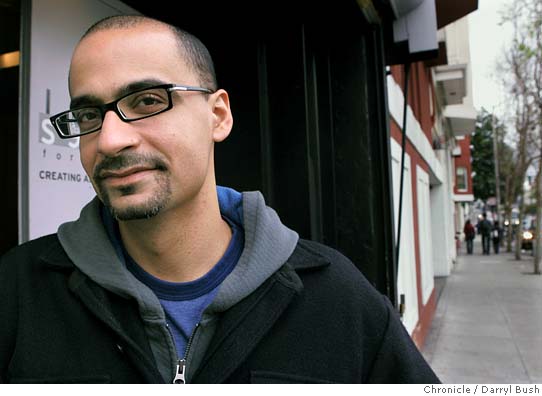
Diaz, author of Drown and Brief Wondrous Life of Oscar Wao, the 2008 Pulitzer Prize winner for fiction, was the opening speaker Tuesday evening for Georgetown University’s two-day Lannon Spring Literary Symposium and Festival. After an opening statement and introduction by two Georgetown Professor-types, Junot stepped to the podium of the very Catholic-looking Gaston Hall to give a ten-minute reading and an hour of Q&A. The theme, “Writing Dangerously in Immigrant America,” also brought Cristina Garcia, Edwidge Danticat, and D.C. playwright Quique Aviles for performances and readings.
Gaston Hall was filled with over 200 students, faculty, students, and more students, reflecting Junot’s appeal to the current youth culture, or strong teaching methods. The interest in Diaz may be due to the scarcity of extraordinary U.S. Latino writers. But, there is also a cultural and literary innovation presented in Oscar Wao's treatment of culture and identity that antiquates the work of early 90s Latino Literature boom authors; Cristina Garcia, Sandra Cisneros, Oscar Hijuelos, etc. The Brief Wondrous Life of Oscar Wao is about an overweight Dominican nerd trying to lose his virginity. That premise allows Diaz to weave a story that swerves along an vast range of cultures and subcultures that connect the history of the Dominican Republic; a multigenerational family story; and a cast of characters influenced by MTV, New Jersey, science fiction, and Hip Hop. Latino Lit Boom authors spoke of the back and forth among countries. But, Diaz presents this range of cultural signposts, attributions to disparate historical references, and street-wise aesthetics in a “cut n’ paste” and de-romanticized abandon that feels as if it can stand on its own feet, without a need to be grouped among previous U.S. Latino books. This sovereignty exemplifies the AmericanPupusa aesthetic, where one can be of and down with the culture, not bound by it. The book’s appeal was made clear when a female student in the audience said “somehow” she relates to him more than Julia Alvarez.
POSTMODERN LATINIDAD
Junot wears glasses, is bald, and sports a goatee. The timbre of his voice and his face make him seem pretty young (based on responses during the Q&A, I infer he is in his 40s). His demeanor and voice is also low-key, with a monotone cadence 100 decibels below a shout. Yet the New Jersey accent is there. And, using words like “motherfucker” and “shit” in an academic setting shows some street is there too. As you listen, you can easily see how close Oscar Wao reflects his personality, and a postmodern kind of Latinidad (oxymoron maybe). Throughout the evening, the author name drops British authors of the literary canon, throws down five “F bombs” to explain how hard it is to write, and talks about how his work relates to race and culture in one breath. His cultural place becomes almost allusive, yet we can see his Latiniad and cultural affiliations. He does not code-switch language, but cultures. He does not represent one hood, but a bunch of places. And, he does not come from one social space, but resides in many.
Presenting such a multiplicity of social constructs can even silence a room. Junot began with a reading from chapter two, where Oscar’s sister Lola talks about the life changing moment when her mother Belicia asks Lola to feel a lump in her breast. It is a powerful as we see strong development between two female characters, and shows a jarringly intimate scene in a narrative of constant movement. After he read, I imagined a few questions would arise from the audience about the role of women in his work, an anecdote about troubled mother and daughter relationships perhaps, or a question about his reading choice for the symposium. I personally found it interesting that a male writer chose this piece to set the tone of the event billed to feature “dangerous” writing on the immigrant experience. The choice also brought up a question of positionality, where a male writes through a female character. Unfortunately, none of these issues were raised for the entire evening. The reading was left hanging as conversations moved towards New Jersey, using the ‘N word’, and comic books.
“UNLOCKING” CULTURE
What did come up was Diaz’s choice of non-traditional cultural references such as science fiction, role playing games, and New Jersey as the vehicles to unleash the narrative. Diaz explained it as dealing with an absence of history and reconstructing memory. He also cited Foucault’s idea of “truth effect,” where truth is not an idealistic absolute but the process in which to create statements. These assumptions allow him to “unlock” culture in different ways, freeing him from old white American archetypes, and the need for “approval,” which he says differs him from the early 90s Latino literature boom. This absence of history applies to the D.R. side as well, where the erasing, reinterpreting, and propagation of Dominican, and larger Latino history, makes any reliance on it meaningless. In other words, the history of the U.S. and D.R. are both fictional, so the need to use them as handrails for writers to transmit truth to the audience is just another act of subjection. Diaz cites Art Spiegelman’s “Maus” to show how to embrace the subjective mode of the comic book to reveal a truth more powerful than a history book, “realism doesn’t unlock” explains Diaz, “comics unlock Trujillo.”
(TRANS)NATIONAL BRDIGES…
Later, Diaz shared two historical precedents related to nationalism that explained his ability to move the narrative of Oscar Wao back and forth between nations, times, and people. Diaz first cited how Jose Marti, a white Cuban, used nationalism to connect causes, races, and nations of varying interests and backgrounds to promote solidarity and Cuban independence. Diaz called Marti’s approach “Nationalism as a door opener, not a door closer” in opposition to today’s use to dehumanize foreign individuals and create an antagonistic “other.” He also shared how his own immigrant identity was interestingly affirmed when learning that the Cherry Blossoms of Washington D.C. were used to replenish lost groves in Japan after World War II, noting a sense of losing one’s origin, but an ability to return and enrich it with foreign influences intertwined. These examples illustrates a unique juxtaposition; Jose Marti’s nationalism was formulated by his travels and transgressions across social and cultural nation-states, and a hybrid Cherry Blossom from the U.S. was used to reinvigorate the national iconography of its place of origin.
RACE AND THE “N” WORD IN A POSTMODERN KINDA WAY
Diaz also applied race in a cut n’ paste postmodern. A student asked what he thought of the recent coverage surrounding the removal of the ‘N word’ from an upcoming edition of Mark Twain’s Huckleberry Finn. Diaz responded that, as an artist, his use of the ‘N word’ is determined when the work calls for it. Plus his use “does not mean a political stance or support of the word.” He then criticized that U.S. society can find it easy to remove the words of arts and literature, but no one would dare change the language of a corporation’s mission statement or official literature. In this instant, he finds politic in the artistic implications of the ‘N word’, but distances himself from a direct sociopolitical relationship when used in the context of racism. This allusiveness removes his obligation to connect and deal with the matter as a Dominican. And placing issues of race in the artist setting seems to give him the ability to shift, change, and rearrange these racial social constructs to meet a narrative’s ends. Feels almost like a freedom many of us seek in our own dealings with identity.
PROCESSING THIS OUT FOR MYSELF AND THE AMERICANPUPUSA VIBE
Junot Diaz’s talk brought me to think about my own journey and place in space. I recall being the Army brat middle-class child, turned latch-key kid living with a single mother and no money; the culture shifts between El Salvador, Guatemala, and United States in my house and school; and my choice of studying the African Diaspora, and immersion as a Hip Hop head, to unlock my own sense of Latindad and Albinism. I never felt my wide-range of cultures was ever reflected in U.S. Latino literature until The Brief Wondrous Life of Oscar Wao. I find it difficult to say how these examples should be applied to the AmericanPupusa aesthetic. But the tricks Junot Diaz shared brought a sense of peace in my identity, and opened my eyes to new ways of interpreting my surroundings and cultural movements, and express myself in ways where I am both aware and oblivious to social constructs. Junot Diaz showed that these constructs we often hold so dear, to the point it becomes part of our DNA, are not to define us, but serve as markers to create on our own terms.
Thursday, April 7, 2011
Woo hoo! AmericanPupusa shows up on Racialicious!!!

boh!!!
Monday, March 28, 2011
Elements of Diversity – How change agents, activists, advocates, and other do-gooders seem to not get it after 40 years of trying.

("Unfinished Painting" by Keith Haring)
I am disappointed in the still inconsistent and unfinished definition of the “D” word applied by mainstream spaces and do-gooder change agents. The word is a bad choice to describe the ideal we seek, and the most incomplete to describe the cure my social anger. “Diversity” has been tainted before I got a chance to play for the team, it’s the jersey we wear on the court, and few in the team know this.
This problem came to light when I attended “New Models in Media and Activism” sponsored by Campus Progress. The event was a panel discussion with Amanda Terkel - Senior politics reporter for The Huffington Post, Amy Austin – Publisher for Washington City Paper, Latoya Peterson – Editor of Racialicious.com, and Melinda Wittstock - Founder, CEO, and Bureau Chief of Capitol News Connection about the intersection of women, activism, and social media. The 80+ attendees comprised of about 90% 20-something white females, a sprinkle of Black females, drips of white males, and one Latino Albino (guess). The panel provided good insight, suggestions, and anecdotes on their experiences and contexts, showing a spectrum of voices from Print, Web 1.0, 1.5 to 2.0 media. The event also provided examples of the ineptitude of many change agents to grasp what diversity means in real-world situations. One panelist painfully tried to keep up with the others by saying things like “Well, that’s why women are better at getting along because we communicate better than men, which is why diversity is important” and other lovely words of wisdom. Throughout the event, audience members and moderators mostly framed issues of diversity in simple terms like getting more African Americans and women in the media. A white male student from American University correlated diversity troubles at his school with what was happening in the media, as Black candidates who run for student government president never win, asking “how can we combat that so we can be more diverse?”
Such comments assume that diversity is measured only by the number of Blacks, women, and Latinos in the room, without considering the structural reframing, process, and competencies that can make the term usable. “Diversity” as shorthand for a tally of physical bodies and archetypes is one of the major issues this term faces for validity and understanding. This incomplete definition makes whites feel apart and not responsible, targeted groups into tokens who feel responsible for carrying the burden in get-togethers, and ultimately diminishing collective knowledge. And for those who accompany the word with action, process, and competency, it annoys us when others in the choir don’t sing with the entire range of notes true diversity asks for.
Another saddening consequence is the neglect of the knowledge, processes, outcomes, and techniques diversity can offer for not just the eradication of inequity, but the addition of new tools of success and growth for organizations, people, and social institutions. There is an untapped resource here where folks can learn and utilize these beautiful gems of cognitive, psychological, leadership, and interpersonal skills. Latinidad, code-switching, double-consciousness, appropriation, Queer theory, communalism, liberation education, etc. can be used for science, math, engineering, business, politics, and health as tools to understand and navigate our society. You should’ve seen the look on people’s faces when I walked into dean’s offices, department meetings, and faculty task forces as they couldn’t figure out why I was sitting there next them… clueless Ph.D. holders.
The worst crime of limiting diversity to stockpiling identities is that it leaves black, white, whomever, oblivious and shackled from taking any social action. I have participated in too many dialogue sessions, hate crime debriefings, class discussions, and lunchroom chit chat where targeted groups have vent sessions, whites stay quiet, and everyone feels good for being in conversation, yet empty that nothing has been done. Everything returns to the status quo of disproportionate favoritism, neglect, anger, and struggle. Why is it that these feelings and situations do not convert well into action? Why do we like the notion of diversity so much, yet we still struggle in using it in the classroom? Why does a room full of positive change agents ask the question “What can I do?” The reason is because action steps, knowledge, competencies, and processes have been severed, or never included, in “diversity.”
In tribute to Strunk and White, I present some dimensions of diversity that should be in everyone’s composition. I would go so far as to say that “Diversity” is completely ineffective without these concepts, which are connected to action. They are abstract in nature because these are three sections that are to be designed differently for each situation.
1. Diversity is content knowledge and text: as stated earlier, there is a wealth of information, lessons, techniques, and vocabulary that diversity has unearthed and exposed for all people to draw from. Much of my own Latinidad was informed by W.E.B. DuBois’s introduction of double-consciousness to American culture. Gloria Anzaldua’s notion of borders can help higher education look at how they frame “global” “intercultural” and “internationals” as it has informed me with understanding the intra-group dynamics between Latinos who come to school as International Students, and those who are U.S. domestic.
2. Diversity provides a set of tools: When I first designed a Latino Leadership course for the University of Maryland, I introduced leadership halfway through the semester, not until we laid out a vocabulary of what Latinidad is in relation to social consciousness, followed by a survey of social issues affecting Latinos. Reappropriaton, code-switching, critical thinking, inclusion, dealing with difference, combating oppression, dialogue, and the third-eye feeds directly into Leadership as a tool for social change, a hybrid, not an addendum to be added afterward. Resulting models would inherently have these components within their DNA. Early Hip Hop is another example of a set of tools designed by a certain few, carrying on the ability to be held and utilized by many outside.
3. Diversity a continuous process with an outcome to be seen and felt: building blocks and masonry must result in the creation of a building. But what does it look like? Take into account which voices were present, what conflicts arose and how were they addressed, what processes and structures were reframed for inclusion, what knowledge was unearthed, what issues of power and privilege eradicated in the process. In addition, the process of diversity means constant revaluations of the questions, which are answered and used again as a new equation to be recalculated again.
Some may ask, "...isn’t this Social Justice?” No, they are not the same. One of the toughest admissions to make is that there are a large number of people of color, folks with disabilities, and other oppressed populations who feel Social Justice omits them from the picture. I am a big fan of Social Justice, it has provided some wonderful tools that I think are great for many situations. But I also lose out on my Latinidad as an asset, my culture is left at the door for “common good,” which can mean a group-think mentality. Social Justice tools and techniques can work alongside the tools of “diversity,” they are schools of thought to seen as cooperative and not competitive.
I may be off here. But, I hope future events can take into account the entire scope and range of the “D” word. It hurts when people walk with you, but still don’t get you. Again, I’m not a fan of the word. I use it alongside “equity,” “inclusion” “multiculturalism” interchangeably. I’m not championing the word, but advocating for a more comprehensive terminology that does not leave me as a checkbox, but a complete change agent and contributor to the new.


Supplement: A corny exhibition of "Diversity" as the curse word... highlighting my beef with its assumed definition.


Subscribe to:
Posts (Atom)